Keerthana Sanjay
Product Designer
NUNIFY
•
REDISIGN
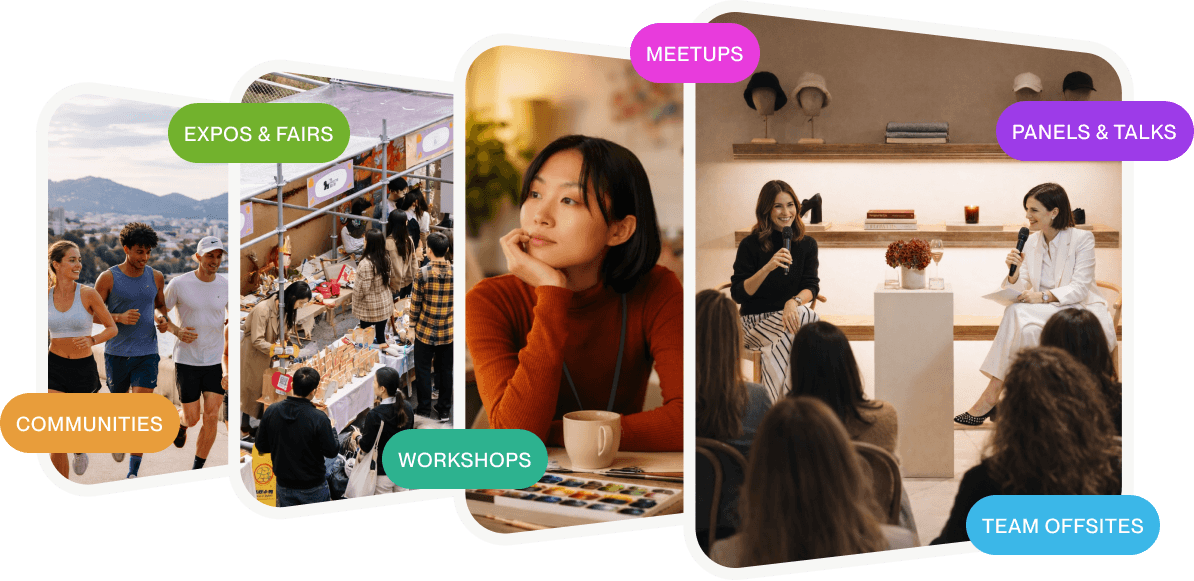
Any event. Any scale.
Minutes to launch.
ROLE
Product Designer
TIMELINE
June - August
2025
SKILLS
Product Designer
Product Strategy
Visual Design
ROLE
Product Designer
TIMELINE
June - August
2024
SKILLS
Product Designer
Product Strategy
Visual Design
OVERVIEW
Understanding How Events Are Actually Run
Most event platform redesigns start with a feature gap. This one started with a different question: why do experienced organisers still spend weeks doing manual work on platforms built to save them time?
As a team of 2 product designers, we had 7 weeks to move from scattered observations to a clear, testable direction. We ran structured interviews, stress-tested our assumptions with prototypes, and iterated against real workflows , not idealised ones.
Product Strategy
Understanding how events are planned operationally not just ideally to find where effort compounds unnecessarily.
Prototyping & Testing
Testing information architecture and setup flows against real scenarios, not hypothetical ones. Edge cases surfaced the actual problems.
Iterating with Feedback
Running concepts against organiser, attendee, and content team perspectives in the same sessions because their needs conflict more than they align.
PROBLEM
Event platforms have solved features, not effort.
Modern platforms can handle registration, check-in, engagement, and analytics. The capability gap isn't the problem. The problem is that organising teams often 2 or 3 people managing 300-person events still spend their first two weeks doing the same repetitive configuration work every single time.
Every team we spoke to had a workaround: spreadsheet templates copied between events, saved email drafts, screenshots of last year's agenda to reconstruct manually. The platform wasn't missing features. It was missing memory.
While capabilities have grown, the effort required to configure and manage them has not reduced at the same pace. Each new feature added another thing to set up.
RESEARCH
8 Interviews
Organiser interviews focused on pre-event setup, not day-of execution
8 Platforms Demos
Mapped feature surface area vs. actual usage patterns
User Groups
Event organisers, attendees, content management teams all had different definitions of "easy"
OPPORTUNITY
Reducing setup effort without reducing event depth
The instinct with AI is to automate. But organisers don't want decisions made for them they want the repetitive work handled so they can focus on decisions that actually matter. The opportunity was to introduce assistance exactly where work is repetitive, and stay out of the way everywhere else.
Faster Setup
Context-aware defaults and suggestions so organisers aren't starting from zero every time. The platform should remember how events work.
Creative Focus
Suggestions surface when organisers are stuck not constantly. The AI should feel like a nudge, not a takeover.
Human Control
Every AI-generated suggestion is editable, reviewable, and transparent. Organisers always know what's a recommendation vs. a decision.
SOLUTION
An event platform that helps teams create, not configure.
The design principle we kept returning to: AI should reduce the distance between intent and execution. It shouldn't replace judgment. From onboarding through communications to the event app itself, the platform anticipates what's needed without demanding input at every step.
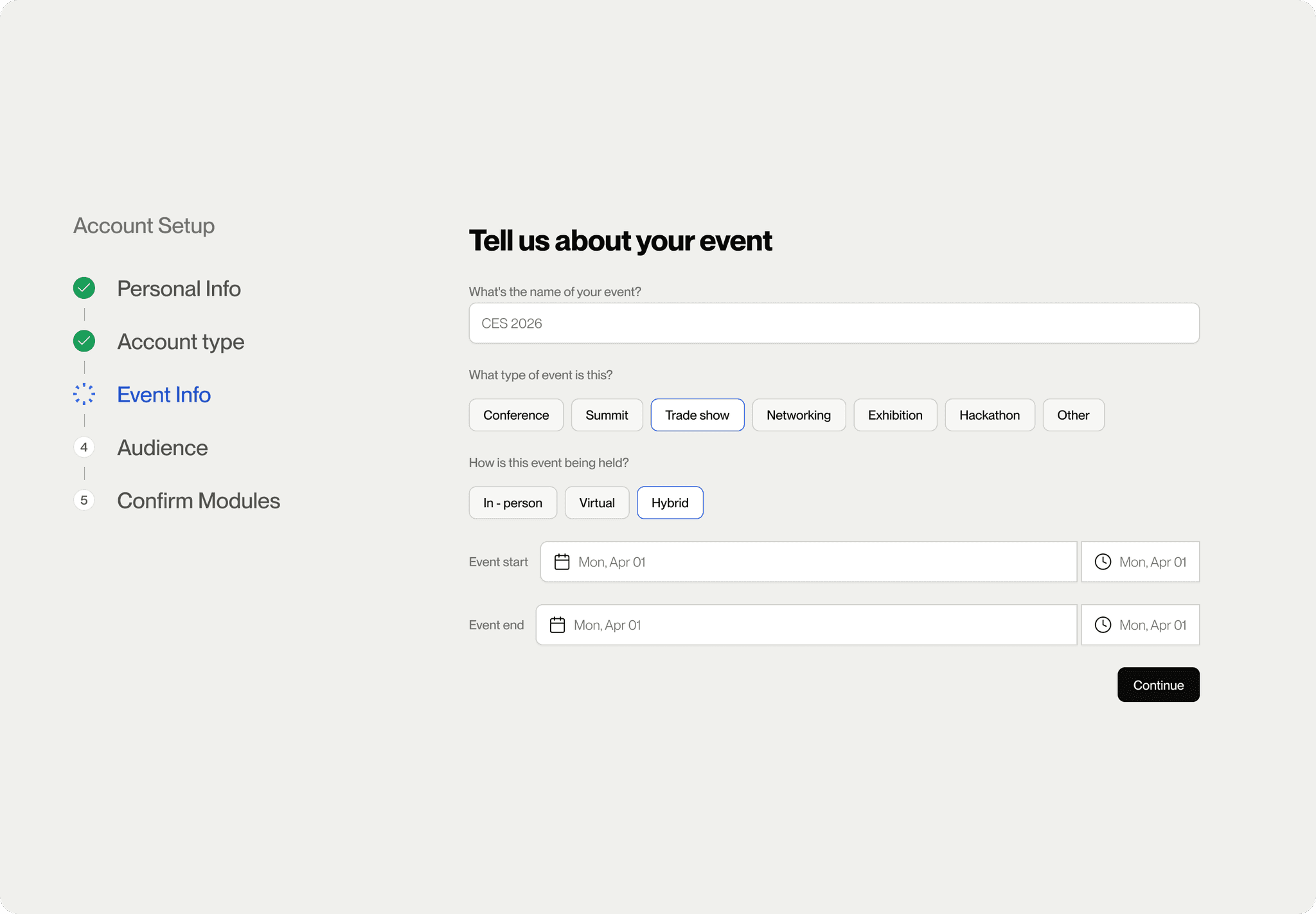
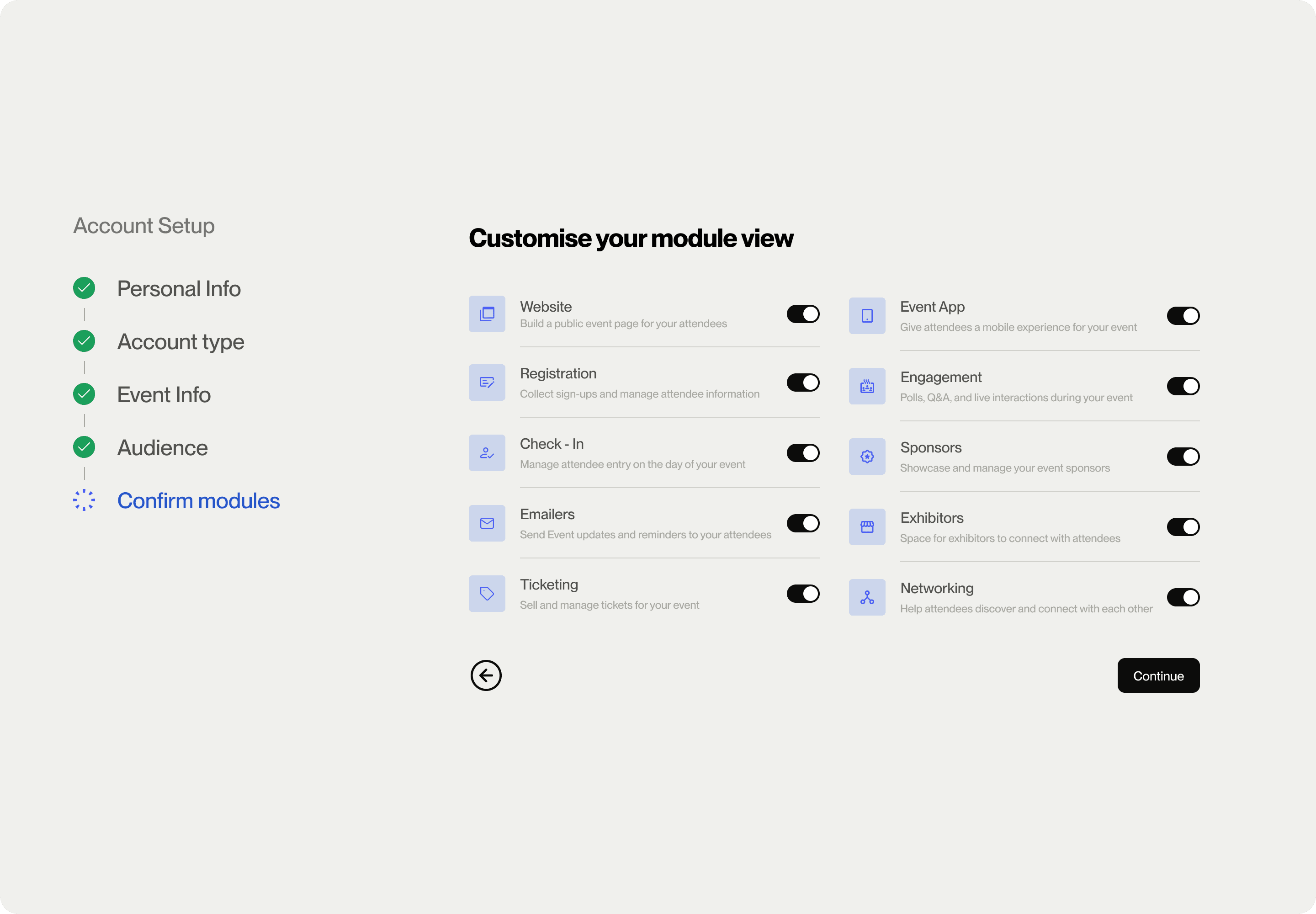
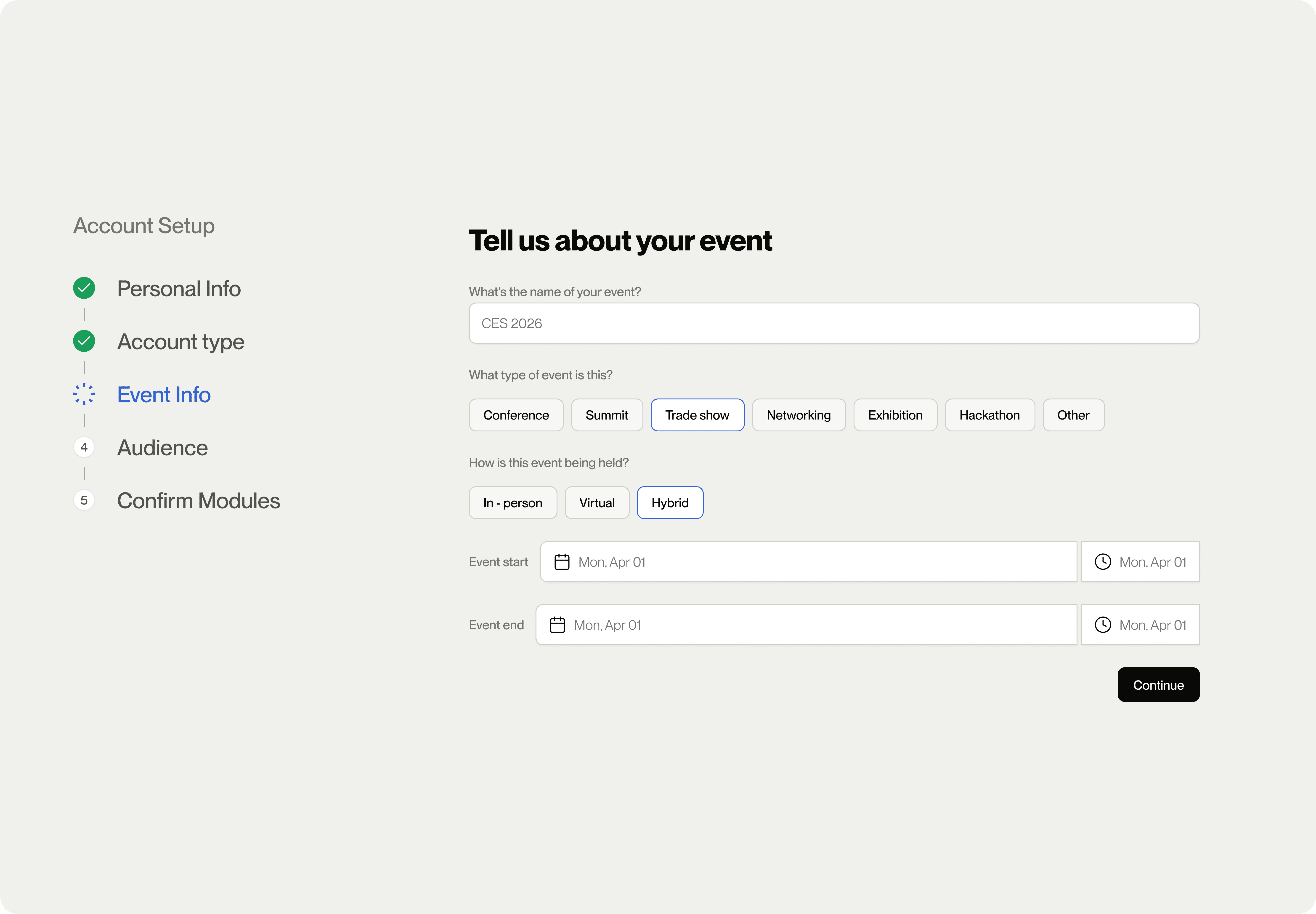
ONBOARDING
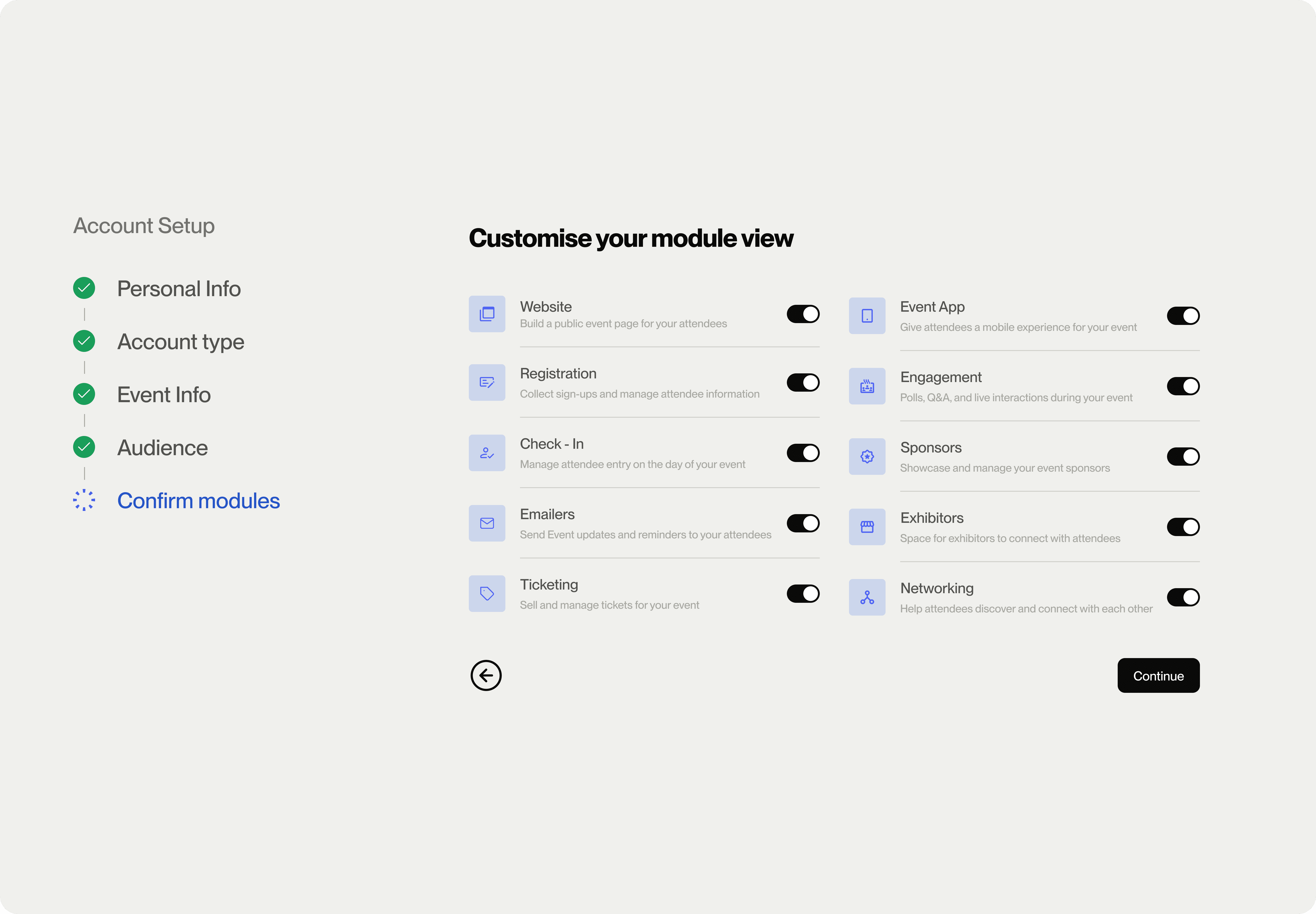
The platform learns before setup begins.
We moved key context collection upfront event type, size, team structure, and goals so the platform could pre-configure relevant modules, surface the right features, and skip steps that don't apply.
This wasn't about personalisation for its own sake. It was about reducing the number of decisions an organiser has to make before they've seen any value from the product.
CORE FLOWS
Intelligent Event Communications
Organisers needed to send targeted, timed notifications to different attendee segments — but the existing flow required setting up rules from scratch every time. We built AI-assisted message drafting with persistent delivery rules, so the logic carries over between events. The decision: own the repetitive part, leave the copy in organiser hands.
Reduce setup effort
We defaulted to suggested content instead of blank states because organisers were abandoning setup at the communications step. A blank email template at 11pm before an event was a friction. Suggestions give organisers something to react to, which is faster than creating from nothing.
Content & Session Management
Sessions, speakers, tracks, and engagement settings were spread across four separate areas of the product. Organisers were navigating between them constantly to make a single content decision. We consolidated into one workspace with AI support for content creation and refinement, but only surfaced where organiser input was actually needed.
Event App Builder
Build attendee-facing experiences through a flexible app builder enhanced by AI-driven recommendations.
Event App Builder
Building the attendee-facing app was the step most organisers delegated to the content team, not because they lacked the knowledge, but because the blank-canvas builder was too open-ended. We introduced AI-driven module recommendations based on event type and size, giving organisers a sensible starting point they could own and adjust themselves.
OUTCOME
More events created
Designed to make small, low-stakes events viable. The target: drop time-to-first-configured-event from ~2 weeks to under a day, so teams stop managing 20-person workshops outside the platform."
Reduced content team dependency
Designed to move app setup back to organisers. Success would look like routine content-team requests falling toward zero, freeing them for complex work.
Increased feature adoption
Designed to lift module activation by shortening the path to configuring each feature adoption was never a discoverability problem, it was an effort problem.
FURTHER CONSIDERATION
Learning From Past Events
Analyze session attendance, engagement activity, networking behavior, survey responses, and content interactions to suggest more relevant event formats, agenda structures, and engagement strategies for future events.
REFLECTION
The real problem wasn't
a lack of features.
I went in expecting a feature gap. Most platforms already do a lot. The harder challenge was helping people navigate what already exists and building confidence that the setup they're doing will produce something good.
AI is most valuable when it supports, not replaces.
The temptation was to automate setup end-to-end. But drafting content, planning agendas, shaping engagement these are decisions organisers care about getting right. AI was most useful when it gave them a starting point, not an answer.
Designing for Range
The same platform has to work for a 20-person internal workshop and a 2,000-person conference. That forced us to provide strong guidance without hard constraints opinionated defaults that don't lock anyone in.
NUNIFY
•
REDISIGN
Any event. Any scale. Minutes to launch.
ROLE
Product Designer
TIMELINE
January - February
2025
TEAM
2 Designers
SKILLS
Product Designer
Product Strategy
Visual Design
OVERVIEW
Understanding How Events Are Actually Run
As a team of 2 product designers, our goal was to land on a clear vision within 7 weeks.
Product Strategy
Understanding how events are planned across teams, identifying operational friction, and defining opportunities to reduce setup effort without sacrificing flexibility.
Prototyping & Testing
Exploring workflows, information architecture, and lifecycle-driven experiences through iterative concepts and user scenarios.
Iterating with Feedback
Refining event setup, governance, and collaboration models through continuous evaluation of workflows, edge cases, and stakeholder needs.
PROBLEM
Event platforms have solved features, not effort.
Modern event platforms provide registration, event apps, check-in, engagement, and analytics. Yet event teams still spend significant time setting up, coordinating, and maintaining events before they go live.
While the industry has become better at adding capabilities, the effort required to configure and manage those capabilities has not reduced at the same pace.
RESEARCH
Interviews
8
Platforms Demos
5
User Groups
Event Organizers, Attendees,
Content management team
OPPORTUNITY
Reducing setup effort without reducing event depth
AI can help reduce setup effort, but organizers still need control over decisions that shape the event experience. The opportunity is to introduce assistance where work is repetitive while keeping creativity and ownership with the event team.
Faster Setup
Reduce manual configuration through context-aware assistance.
Creative Focus
Provide ideas and recommendations when organizers need them.
Human Control
Keep critical decisions editable, reviewable, and transparent.
SOLUTION
An event platform that helps teams create, not configure.
An AI-assisted event workspace that helps organizers configure, manage, and evolve events without sacrificing flexibility or control.
...turning AI into a silent collaborator throughout the event lifecycle.
From agenda creation and communications to registration and engagement, AI reduces repetitive work while supporting creative decision-making only when needed.
CORE FLOWS
Reduce Setup Effort
We defaulted to suggested content instead of blank states because organisers were abandoning setup at the communications step.
Intelligent Event Communications
Create, schedule, and target attendee notifications with AI-assisted messaging while maintaining full control over delivery rules.
Content & Session Management
Manage sessions, speakers, tracks, and engagement settings from a single workspace, with AI support for content creation and refinement.
Event App Builder
Build attendee-facing experiences through a flexible app builder enhanced by AI-driven recommendations.
Onboarding
Collect key event details upfront to recommend relevant modules, features, and workflows before setup begins.
OUTCOME
Event App Builder
As setup became easier, teams began using the platform for smaller internal events that were previously managed outside the system.
Reduced Dependence on Content Teams
Organizers were able to handle more event setup independently, reducing the volume of routine content requests.
Increased Feature Adoption
Features such as engagement tools, event apps, and content modules saw higher usage as they became easier to configure.
FURTHER CONSIDERATION
Learning From Past Events
Analyze session attendance, engagement activity, networking behavior, survey responses, and content interactions to suggest more relevant event formats, agenda structures, and engagement strategies for future events.
REFLECTION
The real problem wasn't
a lack of features.
I went into this project thinking the opportunity would be around new features, but most platforms already do a lot. The bigger challenge was helping people navigate everything that already exists.
AI is most valuable when it supports, not replaces.
Initially, I saw it as a way to automate setup, but over time I felt its biggest value was in helping people think. Whether that's drafting content, planning agendas, or coming up with engagement ideas, AI felt most useful when it acted as a collaborator rather than taking over the process.
Designing for Range
Event platforms need to support everything from small internal workshops to large conferences. Designing for that range reinforced the importance of providing guidance without restricting customization.
NUNIFY
•
REDISIGN
Any event. Any scale.
Minutes to launch.
ROLE
Product Designer
TIMELINE
January - February
2025
SKILLS
Product Designer
Product Strategy
Visual Design
PROBLEM
Event platforms have solved features, not effort.
Modern platforms can handle registration, check-in, engagement, and analytics. The capability gap isn't the problem. The problem is that organising teams often 2 or 3 people managing 300-person events still spend their first two weeks doing the same repetitive configuration work every single time.
Every team we spoke to had a workaround: spreadsheet templates copied between events, saved email drafts, screenshots of last year's agenda to reconstruct manually. The platform wasn't missing features. It was missing memory.
While capabilities have grown, the effort required to configure and manage them has not reduced at the same pace. Each new feature added another thing to set up.
OVERVIEW
Understanding How Events Are
Actually Run
Most event platform redesigns start with a feature gap. This one started with a different question: why do experienced organisers still spend weeks doing manual work on platforms built to save them time?
As a team of 2 product designers, we had 7 weeks to move from scattered observations to a clear, testable direction. We ran structured interviews, stress-tested our assumptions with prototypes, and iterated against real workflows , not idealised ones.
Product Strategy
Understanding how events are planned operationally not just ideally to find where effort compounds unnecessarily.
Prototyping & Testing
Testing information architecture and setup flows against real scenarios, not hypothetical ones. Edge cases surfaced the actual problems.
Iterating with Feedback
Running concepts against organiser, attendee, and content team perspectives in the same sessions because their needs conflict more than they align.
OVERVIEW
Understanding How Events Are Actually Run
As a team of 2 product designers, our goal was to land on a clear vision within 7 weeks.
Product Strategy
Understanding how events are planned across teams, identifying operational friction, and defining opportunities to reduce setup effort without sacrificing flexibility.
Prototyping & Testing
Exploring workflows, information architecture, and lifecycle-driven experiences through iterative concepts and user scenarios.
Iterating with Feedback
Refining event setup, governance, and collaboration models through continuous evaluation of workflows, edge cases, and stakeholder needs.
RESEARCH
8 Interviews
Organiser interviews focused on pre-event setup, not day-of execution
8 Platforms Demos
Mapped feature surface area vs. actual usage patterns
User Groups
Event organisers, attendees, content management teams all had different definitions of "easy"
OPPORTUNITY
Reducing setup effort without reducing event depth
The instinct with AI is to automate. But organisers don't want decisions made for them they want the repetitive work handled so they can focus on decisions that actually matter. The opportunity was to introduce assistance exactly where work is repetitive, and stay out of the way everywhere else.
Faster Setup
Context-aware defaults and suggestions so organisers aren't starting from zero every time. The platform should remember how events work.
Creative Focus
Suggestions surface when organisers are stuck not constantly. The AI should feel like a nudge, not a takeover.
Human Control
Every AI-generated suggestion is editable, reviewable, and transparent. Organisers always know what's a recommendation vs. a decision.
SOLUTION
An event platform that helps teams create,
not configure.
An AI-assisted workspace that handles the setup scaffolding so organisers can spend their energy on the things that make each event distinct. Not a smarter interface a quieter one.
The design principle we kept returning to: AI should reduce the distance between intent and execution. It shouldn't replace judgment. From onboarding through communications to the event app itself, the platform anticipates what's needed without demanding input at every step.
CORE FLOWS
Reduce Setup Effort
We defaulted to suggested content instead of blank states because organisers were abandoning setup at the communications step. A blank email template at 11pm before an event isn't creative freedom it's friction. Suggestions give organisers something to react to, which is faster than creating from nothing.
Intelligent Event Communications
Organisers needed to send targeted, timed notifications to different attendee segments — but the existing flow required setting up rules from scratch every time. We built AI-assisted message drafting with persistent delivery rules, so the logic carries over between events. The decision: own the repetitive part, leave the copy in organiser hands.
Content & Session Management
Sessions, speakers, tracks, and engagement settings were spread across four separate areas of the product. Organisers were navigating between them constantly to make a single content decision. We consolidated into one workspace with AI support for content creation and refinement but only surfaced where organiser input was actually needed.
Event App Builder
Building the attendee-facing app was the step most organisers delegated to the content team not because they lacked the knowledge, but because the blank-canvas builder was too open-ended. We introduced AI-driven module recommendations based on event type and size, giving organisers a sensible starting point they could own and adjust themselves.
The platform learns before setup begins.
We moved key context collection upfront event type, size, team structure, and goals so the platform could pre-configure relevant modules, surface the right features, and skip steps that don't apply.
This wasn't about personalisation for its own sake. It was about reducing the number of decisions an organiser has to make before they've seen any value from the product.
ONBOARDING
OUTCOME
More Events Were Created
As setup became faster, teams started running smaller internal events through the platform
Events that were previously too low-stakes to justify the configuration time. The platform became usable at a new scale.
Reduced Dependence on Content Teams
Organisers handled more setup independently. Routine content requests to the content team dropped, freeing that team for higher-complexity work. This directly mirrors the original problem.
Increased Feature Adoption
Engagement tools, event apps, and content modules saw higher usage not because they were new, but because the path to configuring them was shorter. Discoverability was never the issue; effort was.
FURTHER CONSIDERATION
Learning From Past Events
Analyze session attendance, engagement activity, networking behavior, survey responses, and content interactions to suggest more relevant event formats, agenda structures, and engagement strategies for future events.
REFLECTION
The real problem wasn't a lack of features.
I went in expecting a feature gap. Most platforms already do a lot. The harder challenge was helping people navigate what already exists and building confidence that the setup they're doing will produce something good.
AI is most valuable when it supports, not replaces.
The temptation was to automate setup end-to-end. But drafting content, planning agendas, shaping engagement these are decisions organisers care about getting right. AI was most useful when it gave them a starting point, not an answer.
Designing for Range
The same platform has to work for a 20-person internal workshop and a 2,000-person conference. That forced us to provide strong guidance without hard constraints opinionated defaults that don't lock anyone in.